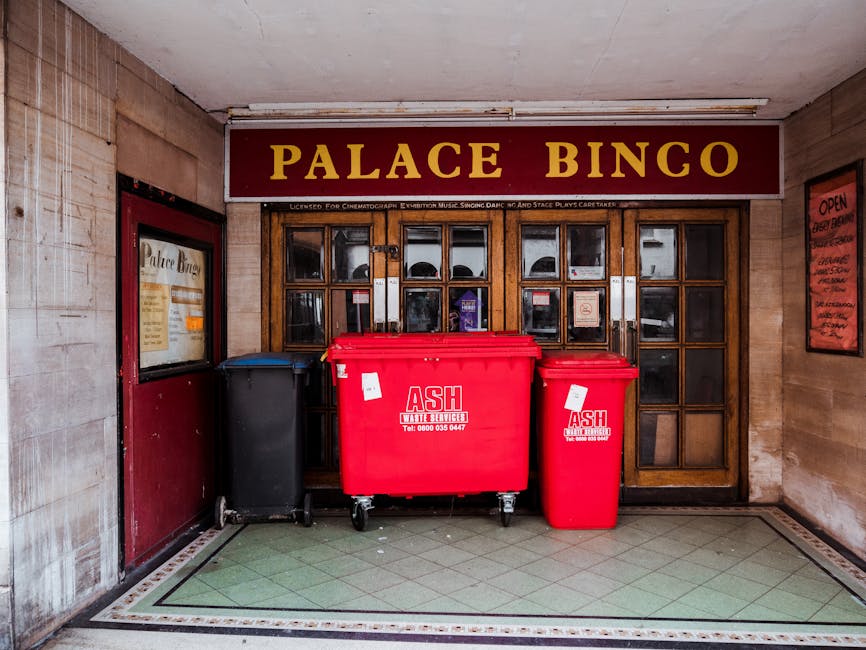
Crystal Palace station rubbish drop off and collection guide
If you are dealing with bags, broken furniture, or the awkward leftovers from a clear-out, the whole Crystal Palace station rubbish drop off and collection guide question can feel more complicated than it should. You want the waste gone, you want it handled properly, and frankly you do not want to waste a Saturday standing around with a pile of stuff that should have been out of the way hours ago. This guide walks through how rubbish drop-off and collection tends to work around Crystal Palace station, what to expect, what to avoid, and how to choose the most sensible route for your situation.
Whether you are clearing a flat, shifting office waste, getting rid of builders' debris, or just trying to manage a few bulky items after a busy week, the aim here is simple: help you make a clean, safe decision without guesswork.
Table of Contents
- Why Crystal Palace station rubbish drop off and collection guide Matters
- How Crystal Palace station rubbish drop off and collection guide Works
- Key Benefits and Practical Advantages
- Who This Is For and When It Makes Sense
- Step-by-Step Guidance
- Expert Tips for Better Results
- Common Mistakes to Avoid
- Tools, Resources and Recommendations
- Law, Compliance, Standards, or Best Practice
- Options, Methods, or Comparison Table
- Case Study or Real-World Example
- Practical Checklist
- Conclusion
- Frequently Asked Questions
Why Crystal Palace station rubbish drop off and collection guide Matters
At first glance, rubbish removal looks like a simple chore. Put waste out. Get it collected. Job done. But around a busy transport hub like Crystal Palace station, timing, access, foot traffic, and property layouts all make a bigger difference than people expect. A bag left in the wrong place can become a nuisance. A bulky item moved at the wrong time can block a shared entrance. And mixed waste, if not separated properly, can turn a tidy clear-out into a headache.
That is why a practical local guide matters. It helps you understand the difference between drop-off and collection. Drop-off usually means you transport rubbish yourself to a suitable point or facility. Collection means a team comes to your location and removes it for you. They sound similar, but in real life they solve different problems. One is better for small, manageable loads. The other is better when the waste is heavy, awkward, or simply too much to carry.
The station area also tends to mean narrow streets, limited parking, and people moving in all directions. If you have ever tried to carry a mattress or a pile of renovation waste through a busy London morning, you will know it is not exactly a relaxing experience. Sometimes the sensible choice is not the cheapest on paper, but the option that saves time, reduces lifting, and keeps everything compliant.
Key takeaway: the best rubbish solution is the one that fits the type of waste, the amount you have, and the access conditions on the day. Around Crystal Palace station, convenience and safety usually matter just as much as cost.
If your waste includes old furniture or mixed household items, it may also be worth looking at furniture disposal or broader home clearance support rather than trying to tackle everything in one go.
How Crystal Palace station rubbish drop off and collection guide Works
The process is usually straightforward, but the details matter. In simple terms, you start by identifying what you want removed, then decide whether you will move it yourself or arrange a collection. From there, you sort the waste into sensible categories and prepare it for handover. That might sound obvious, yet it is where many people slip up.
Drop-off in practice
Drop-off is usually the better choice when you have manageable waste, a vehicle that can safely carry it, and enough time to do the trip without causing disruption. Think bagged household rubbish, a few old boxes, broken small items, or light clearing from a room refresh. The key is to package everything securely and make sure you know exactly what can and cannot be taken.
It becomes less practical when the waste is bulky, dirty, unusually heavy, or scattered across several rooms. In those cases, the cost in time and effort can outweigh the savings. And let's face it, there is nothing glamorous about trying to wedge a smashed wardrobe into the back of a car while hoping the upholstery survives.
Collection in practice
Collection is the more convenient route for heavier or larger loads. A team arrives, assesses the waste, and removes it from the property or agreed access point. This is often the best fit for landlords, busy households, offices, and anyone dealing with a lot of items at once.
If the waste is part of a bigger clearance, collections can be combined with services such as flat clearance, house clearance, or office clearance, depending on the type of premises involved.
What usually happens on the day
- You confirm the type and amount of waste.
- You describe access conditions, such as stairs, lifts, rear entrances, or parking restrictions.
- You agree what is being removed and what must stay.
- The waste is loaded and transported for processing or disposal.
- Recyclable materials are typically separated where practical.
If your waste is from building work, a dedicated builders waste clearance approach is usually more appropriate than treating it as ordinary household rubbish.
Key Benefits and Practical Advantages
There are a few clear reasons people choose a local rubbish drop-off or collection solution instead of leaving waste to build up. Most of them come down to time, safety, and sanity. Yes, sanity counts.
- Less clutter: rubbish does not linger in hallways, gardens, or communal areas.
- Reduced lifting: collection avoids repeated carrying, especially for bulky items.
- Better sorting: it is easier to separate recyclable material before it becomes one mixed pile.
- Cleaner access: shared spaces stay tidier and easier to use.
- Faster turnaround: waste leaves the property in one coordinated move rather than a dozen smaller trips.
- More flexibility: you can choose the method that suits the size and urgency of the job.
A quieter advantage is mental. When rubbish sits there, it keeps asking for attention. You see it every time you walk past. The broken chair in the corner. The old carpet roll by the wall. The awkward bag that nobody quite wants to touch. Once it is gone, the whole place feels less temporary and more settled.
For businesses or shared workspaces, using a managed waste solution can also help keep routine operations running smoothly. If that sounds familiar, business waste removal is often the more practical route than ad hoc disposal.
Who This Is For and When It Makes Sense
This guide is relevant to a wider range of people than you might think. It is not just for homeowners or people moving house. In fact, many of the best uses are fairly ordinary, day-to-day situations.
- Residents clearing a flat or house: especially after a move, refurb, or declutter.
- Landlords and agents: when a tenant leaves behind rubbish or mixed items.
- Office managers: if old desks, chairs, packaging, and archive waste are piling up.
- Trades and builders: for rubble, timber offcuts, packaging, and site waste.
- Busy households: when there simply is not time to do multiple tip runs.
- People with limited access or mobility: where moving items yourself would be difficult or unsafe.
It also makes sense when the waste is an awkward mix. For example, a garage full of garden tools, broken furniture, old paint tins, and cardboard is rarely worth handling as separate little jobs. A more organised clearance is usually better. If that sounds familiar, you may want to look at garage clearance or garden clearance depending on where the mess has gathered.
Truth be told, if you are pausing to ask whether the waste is getting in the way of daily life, that is usually your answer right there.
Step-by-Step Guidance
Here is a practical way to handle the job without overcomplicating it. Keep it simple. Simple is good.
1. Identify the waste type
Separate general rubbish from bulky items, recyclable materials, garden waste, and construction debris. This gives you a clearer idea of what service you need and what can be handled safely.
2. Check access early
Look at door widths, staircases, lift access, parking restrictions, and whether waste needs to be carried through communal areas. Access is one of the biggest factors in how smooth the job will be, and it is often underestimated.
3. Decide between drop-off and collection
If the load is small and transport is easy, drop-off may be enough. If the load is heavy, mixed, or time-sensitive, collection is usually the cleaner solution. No heroics needed.
4. Sort and bag items sensibly
Keep sharp items wrapped, liquids sealed, and loose debris contained. Do not leave small fragments scattered in a stairwell or driveway. A tiny bit of preparation saves a lot of annoyance later.
5. Keep only approved items in the load
Some items may need special handling or separate disposal. If you are unsure, ask before mixing things together. That is especially important for anything that could be classed as hazardous or awkward to handle.
6. Choose the right support level
For a straightforward load, a basic waste removal service may be enough. For fuller clear-outs, a more structured service like waste removal gives you a better one-stop option.
7. Confirm the final handover
Before anything leaves the property, do a last check. What is going? What is staying? If there are valuables, documents, or personal items, remove them first. That little pause saves awkward surprises, and nobody wants that.
Expert Tips for Better Results
After enough clear-outs, a pattern emerges. The jobs that go smoothly are rarely the luckiest ones. They are the prepared ones.
- Put the hardest items near the exit. If there is a heavy wardrobe, a mattress, or damaged shelving, make it easy to reach.
- Use one staging area. Do not scatter waste across several rooms unless you have to.
- Separate recyclable material early. Cardboard, metal, and clean wood are often easier to handle when grouped.
- Label anything uncertain. A simple note like "keep" or "remove" avoids confusion in shared spaces.
- Allow a bit of buffer time. Things always take longer than they look from the doorway. Always.
- Think about noise and neighbours. Especially in terraces, blocks, and busy streets near the station.
For example, if you are emptying a loft, it is usually wise to check what can come down safely before you start moving everything at once. Loft spaces have a habit of hiding odd little surprises, from dusty boxes to old suitcases nobody remembers packing. If that is your situation, loft clearance may be the better fit than basic rubbish removal.
Common Mistakes to Avoid
This is the section people skip, and then regret later. A few small mistakes can turn a tidy clearance into a much longer day.
- Mixing everything together: makes recycling harder and can complicate disposal.
- Underestimating volume: one pile in the corner often turns into more than one load.
- Forgetting access constraints: parking and stairs can make a major difference.
- Leaving waste outside too early: especially in areas with foot traffic or shared entrances.
- Not checking item restrictions: some materials need extra care.
- Assuming collection is always cheaper: not always true once time, vehicle use, and labour are considered.
One small but common issue is the "I'll deal with the rest later" approach. That is how one bag becomes three. Then a shelf. Then half the spare room. You know how it goes.
If you are replacing furniture at the same time, consider handling disposal as part of the plan rather than after the fact. Furniture clearance can make the job feel much less fragmented.
Tools, Resources and Recommendations
You do not need a truckload of equipment to manage rubbish properly, but a few basic tools make the process easier and safer.
- Heavy-duty rubble sacks: better for dense waste than thin bin liners.
- Gloves: especially useful for sharp edges, splinters, or dusty items.
- Tape and wrap: for securing loose bits, cables, or broken panels.
- Dolly or sack truck: helpful for heavier loads where access allows.
- Labels or markers: useful when separating keep, recycle, and remove piles.
It also helps to know which support pages you may need before you start. A property tidy-up may involve one service, or several. A garden shed might lead you to house clearance for indoor items, then a separate garden job for outdoor waste. Likewise, a workplace clean-up may call for office clearance along with routine business waste removal.
For anyone concerned about how waste is processed, the recycling and sustainability page is a useful place to understand the general approach to reuse and responsible disposal. And if you want to understand how the company operates more broadly, the about us page gives a bit more background.
Law, Compliance, Standards, or Best Practice
Waste handling in the UK is not just a practical matter. There is also a basic duty of care around how rubbish is stored, moved, and handed over. You do not need to become a legal expert to get this right, but you do need to be careful about who takes the waste and how it is managed.
Best practice is fairly simple:
- Use a responsible waste carrier.
- Keep waste separated where possible.
- Do not leave rubbish in communal or public spaces without permission.
- Handle anything hazardous, sharp, or potentially harmful with extra caution.
- Make sure records, receipts, or confirmations are kept where appropriate.
If you are arranging a clearance from a rental property, shared building, or commercial space, it is especially sensible to document what has been removed and when. That protects everyone involved and reduces the chance of disputes later. Not glamorous, sure, but very useful.
For peace of mind around operating standards and site procedures, it is also worth reviewing health and safety policy, insurance and safety, and, where relevant, terms and conditions. If you need to ask a question before booking, the contact us page is the natural next step.
Options, Methods, or Comparison Table
Choosing between drop-off and collection depends on your waste, your schedule, and your access. Here is a simple comparison.
| Method | Best for | Pros | Possible downside |
|---|---|---|---|
| Self drop-off | Small, manageable loads | Can be cheaper; flexible if you already have transport | Time-consuming; carrying and loading are on you |
| Scheduled collection | Bulky, mixed, or heavy waste | Convenient; less lifting; better for larger jobs | May cost more than DIY if the load is tiny |
| Full clearance | Rooms, flats, offices, or whole-property clear-outs | Efficient; coordinated; less stress | May be more than you need for a very small amount |
If the job is bigger than a few bags, collection often wins on practicality. If it is a small back-seat load and you already have the car ready, drop-off may be perfectly reasonable. The right answer is not always the most obvious one.
Case Study or Real-World Example
Imagine a small flat a short walk from Crystal Palace station. The tenant has moved out, and what remains is a mix of black sacks, a broken bedside table, a worn-out office chair, and a couple of cardboard boxes that have somehow multiplied in the corner. Nothing dramatic. Just enough to make the place feel unfinished.
At first, the idea was to load everything into a car and do the disposal separately. But once the items were gathered, it was clear the furniture was awkward, the access was tight, and the stairwell was not ideal for repeated trips. A combined clearance made more sense. The waste was sorted, the furniture removed in one visit, and the room was left clear enough for cleaning and handover the same day.
That kind of decision is common. People usually start by assuming they will "just deal with it themselves". Then they see the size of the pile in daylight and think, hmm, maybe not. And to be fair, that is a sensible moment. You do not get extra points for struggling.
In another familiar scenario, a small business near the station clears out packaging, old shelving, and a few damaged office items after a stock refresh. In that case, office clearance and business waste removal work together far better than treating the waste as ordinary household rubbish.
Practical Checklist
Use this before the waste leaves the property.
- Have I identified exactly what is being removed?
- Have I separated anything I want to keep?
- Have I checked whether the waste needs special handling?
- Is access clear for lifting or loading?
- Are bags, boxes, or loose items secured properly?
- Have I considered recycling where possible?
- Do I know whether drop-off or collection is the better option?
- Have I confirmed timings, parking, or entry arrangements?
- Are there any items that should be handled separately?
- Have I checked the final space before the team leaves or before I drive off?
A good checklist is a quiet lifesaver. Nothing fancy, just a clean way to avoid the usual last-minute scramble.
Conclusion
The smartest way to approach Crystal Palace station rubbish drop off and collection is to match the method to the job. Small, easy loads may suit drop-off. Larger, heavier, or mixed waste usually makes far more sense as a collection. If the job is part of a move, a declutter, a renovation, or a business clean-up, a more structured service is often the calmer option.
The real goal is not just getting rid of rubbish. It is doing it safely, quickly, and without making the day harder than it needs to be. Once you look at it that way, the decision becomes clearer. A tidy space is a quieter space, and that is worth a lot.
Get a free quote today and see how much you can save.
And if you are still weighing up the best route, take your time. A sensible decision now is usually the one you are happiest with later.
Frequently Asked Questions
What is the difference between rubbish drop-off and collection near Crystal Palace station?
Drop-off means you transport the waste yourself to a suitable location or facility. Collection means a team comes to your property or agreed access point and removes it for you. Drop-off works best for smaller, easy-to-carry loads. Collection is usually better for bulky or heavy items.
Can I mix household rubbish with furniture or builders' waste?
Sometimes, but it is usually better to separate them where possible. Mixed loads can be harder to sort and may need different handling. If you have sofas, broken cabinets, rubble, or renovation waste, ask in advance how best to prepare it.
Is collection usually better than doing it myself?
Not always. If you only have a few bags and already have transport, DIY drop-off can be fine. But if the items are heavy, awkward, or spread across multiple rooms, collection is often faster, safer, and less stressful.
What should I do with broken furniture?
Broken furniture is best kept separate from loose rubbish if possible. Remove sharp edges where safe, keep pieces together, and avoid leaving them in a shared walkway. A dedicated furniture disposal or furniture clearance service is often the most practical option.
How do I know if my waste needs special handling?
If it includes sharp materials, liquids, electrical items, or anything you are unsure about, treat it cautiously and ask before moving it. When in doubt, do not mix it into a general load. A quick check can prevent a lot of trouble later.
Can offices around Crystal Palace station use this kind of service?
Yes. Offices often need help with desks, chairs, packaging, archive waste, and end-of-lease clear-outs. In those cases, office clearance and business waste removal are usually the most suitable options.
What if I live in a flat with difficult access?
That is very common. Narrow stairs, no lift, limited parking, and shared entrances can all affect the best method. Tell the team about access early so the clearance can be planned properly. Flat clearance is often the right fit for this kind of job.
Do I need to sort recyclable items first?
It is always sensible to do so where practical. Cardboard, metal, and clean reusable items may be easier to separate before removal. It helps the process run more smoothly and supports better waste handling overall.
What happens if I leave rubbish outside too early?
It can create clutter, attract complaints, and potentially block access for neighbours or pedestrians. In busy areas near a station, it is much safer to keep waste inside or in a controlled staging area until the agreed collection time.
How much preparation should I do before a collection?
As much as you reasonably can without overdoing it. Group items together, clear a path, secure loose waste, and decide what is definitely going. A little preparation makes the job smoother and can reduce the time spent on site.
Can I arrange clearance for a whole house or just one room?
Yes, both are common. Some people only need one room cleared after a move or renovation, while others need a larger property clearance. House clearance and home clearance are useful if the waste involves several rooms or a full property reset.
Where can I learn more about how the company handles waste responsibly?
The recycling and sustainability page is a good place to start. If you also want to understand how the business works, the about us page and health and safety policy page provide extra context in plain language.